A beloved figure in Melbourne’s local folk scene, Clara Darcy fronts The Medicine Women, who’ve taken her musings to cafes, bars, and art galleries.
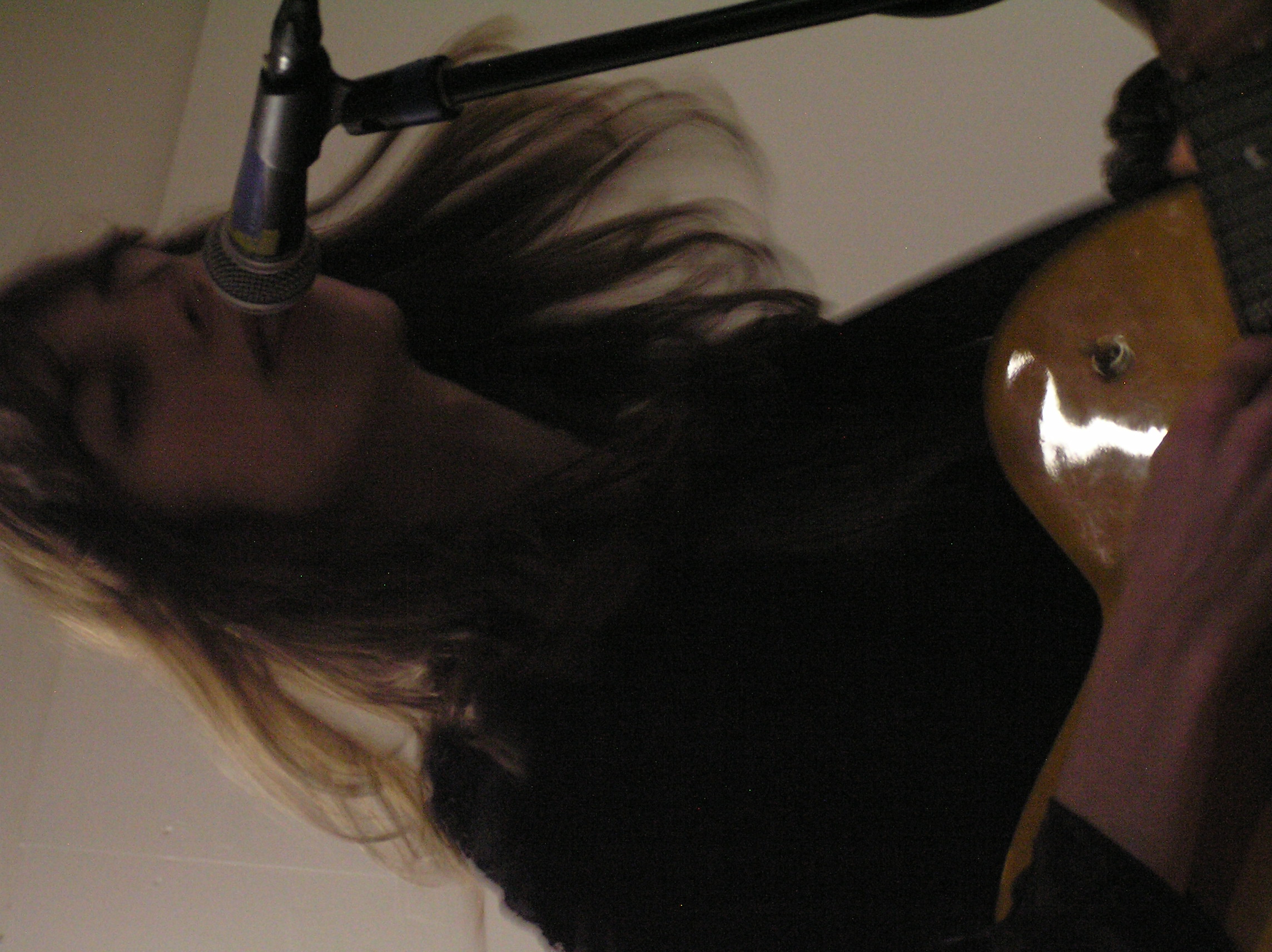
Ensembles like The Medicine Women are wonderful. The five-piece includes songwriter Clara Darcy, violist Stephanie Sheahan, bassist Amy Rogers (LXRP), brass player Alice Collard-Campbell (Red Orchestra), and drummer Tom Hobbins (babchia), and it’s clear they have a collective shared love for cross-genre music driven by passion. Darcy made her meek entrance into the city’s folk scene in 2023, singing along to Sufjan Stevens songs with other musicians in a park. The Medicine Women have since played on many lineups with friends, but despite their lively presence, Darcy never expected to be in this folk world.
“When I was just out of high school, I loved Car Seat Headrest and Black Country, New Road,” she says of her earlier musical interests. “I didn’t think I was going to be doing folk and country stuff. I liked to listen to it, but I hadn’t investigated that type of music very much.” She credits meeting April May with sparking her interest—May is one driving force behind this unassuming folk scene, performing on lineups with bands like kisses, Daisypicker, and Linen. Additionally, Sheahan’s and Collard-Campbell’s folk purism, and Rogers’ and Hobbins’ love for songwriting, together informed this band fuelled by the process of songcraft. Supported by a coterie of fans—really just dozens of her friends—on stage, Darcy appears as a shrewd songwriter in her own right.
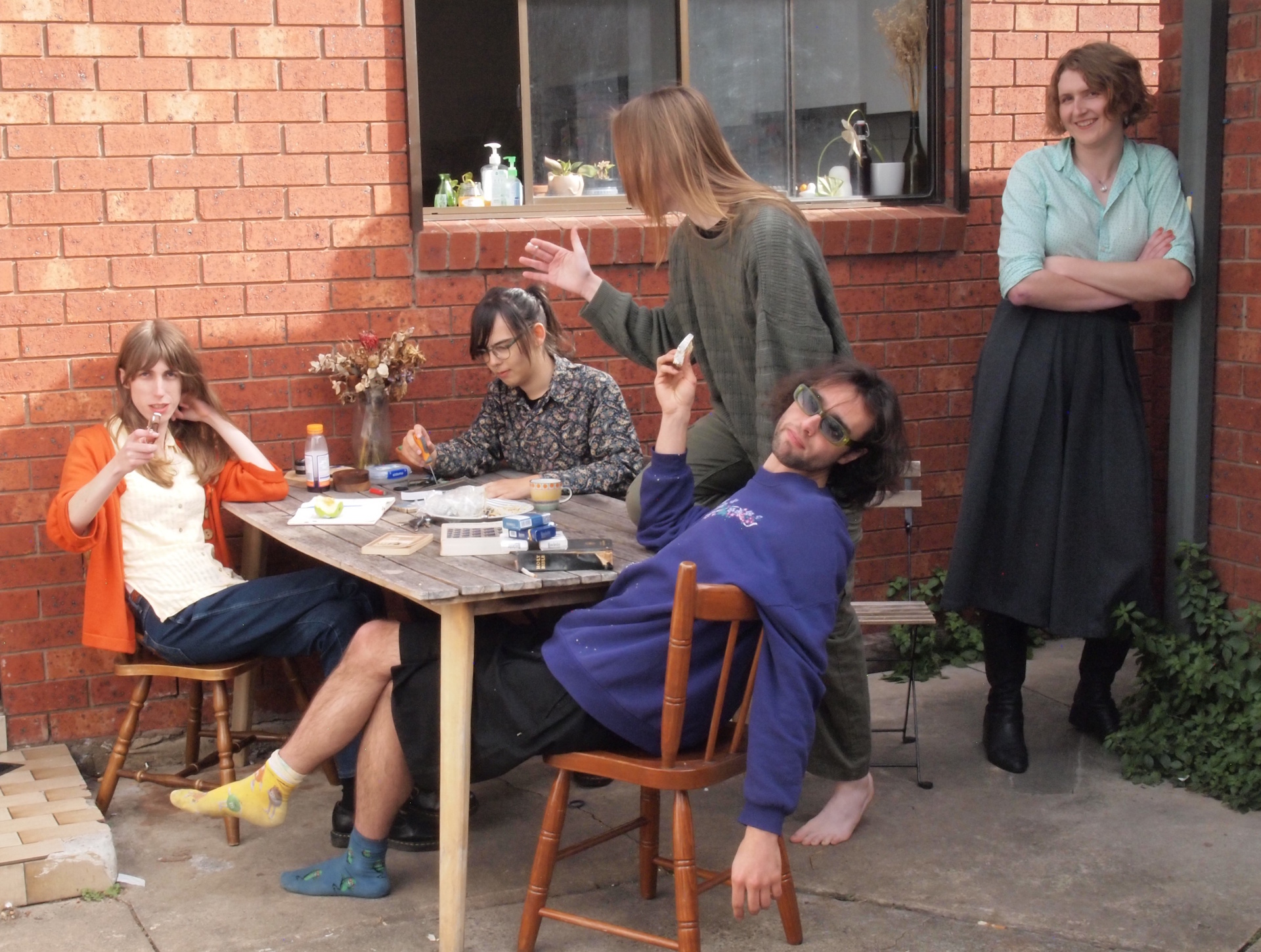
At a young age, Darcy learned classical and jazz piano and wrote an album during COVID that she says is “not very good. That’s part of developing the craft.” Still, her hesitancy to commit to a life as a musician stems from her desire for stability. “The economy is in a real downturn,” Darcy says. “I haven’t been able to study it in a way that I would like.” Yet immersing herself with more committed musicians has inspired her to dive into the art of songwriting. “It’s one of many passions,” she affirms. “I have some things to say, but I don’t have endless things to say. That is maybe why I’m okay with songwriting having its moment in my life, but not over everything else.”
The Medicine Women’s magnetism is not only felt when watching their interplay live, but also in their cherished presence in Melbourne’s DIY creative communities. The hard work and ambition that go into cultivating such a grassroots environment always lead to unforgettable opportunities. Darcy grew up in Caulfield, but the DIY world was unbeknownst to her for many years—the only places she knew for live music were Rod Laver Arena, The Espy, or her local RSL. “It has been such a revelation that people are choosing Melbourne to put all of that effort into making DIY seem possible,” she says in awe. The togetherness is palpable, but so is the need to put in the effort, where “discerning” audiences are the norm. “They’re going to see you, and if you play good, they’re going to show up. If you don’t play well, they might not. It’s not like you’re the only band in town, and it’s a great environment to be involved in.”
The band have written a wealth of material going towards what will be The Medicine Women’s self-titled debut album—Darcy reveals they’ve already written another album’s worth. While actually recording it has been slow, given everyone’s existing commitments have gotten in the way, they’ve released the unravelling 10-minute single “Love Letter Pt. IV & II”. It’s an excursion through Darcy’s wondrous propensity for observational storytelling that concludes as a jovial foot stomper with her singing her heart out. It’s one part Joni Mitchell, another part Car Seat Headrest. Elsewhere, mentions of places like Sydney Road ground it in reality—it’s completely born from Melbourne.
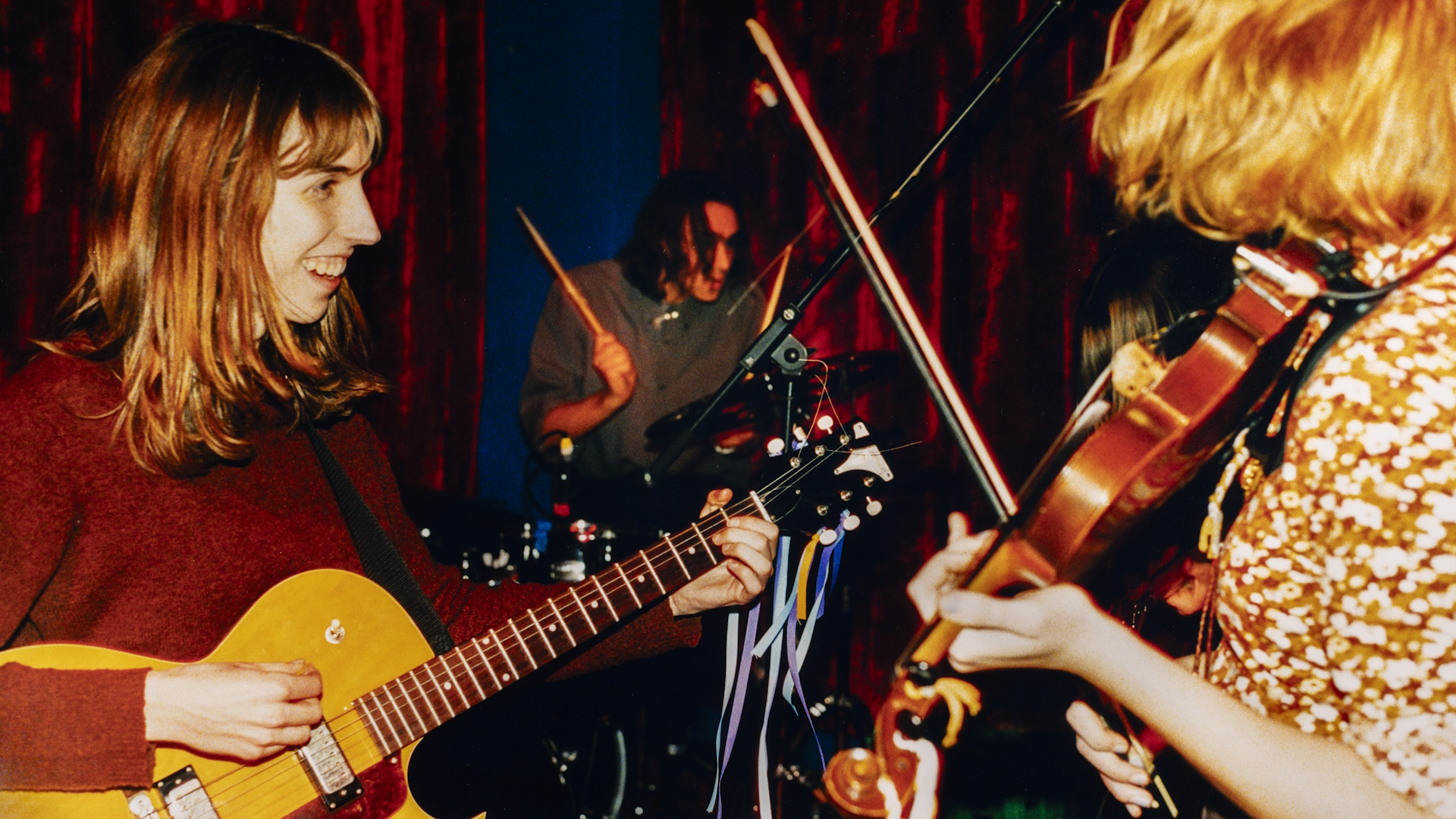
“That single and this album are specifically dedicated to the community of transgender women in Melbourne. We have a lot going on,” Darcy explains. “There’s a lot of social intrigue, and I feel like a novelist. I feel like I’m on the Left Bank sometimes in Paris in the interwar period. I try to write songs that are grounded in the personalities of the people who I’ve met, but are not based on actual events.” That’s another joy of songwriting too: Being able to take your lived experience and transform it into something else, including fantasy. “I want to imagine something, but with the people that are around me and changed a little bit.”
Anyone who has seen Darcy perform knows she and her band are warmly embraced—the lack of recorded material may be a cheeky incentive to catch them live. But I’ve also fanned the flames of that phenomenon, inviting the folk-rockers to perform at the opening night for my collaborative art exhibition with Isabelle Concorde, come along, be with the pavement. A friend of mine captured a video pointing down at the crowd in front of them, everyone’s feet shuffling to The Medicine Women’s upbeat, melodic folk songs. Swaying a crowd like that is incredible, and Darcy agrees.
“What I learned from April May was that if you’re a folk musician, you can look inward and try to get something emotionally out of you, but people just respond to danceable music. Folk music was invented for dancing,” Darcy muses. It’s no secret that Melburnian concertgoers tend to watch shows like statues, and we laugh as we agree crowds would be better if they danced more. “I’m part of this problem! I’m shy. I get shy when I’m not up on the stage,” Darcy admits. “That’s why I get up on the stage; I don’t have to dance up there.”
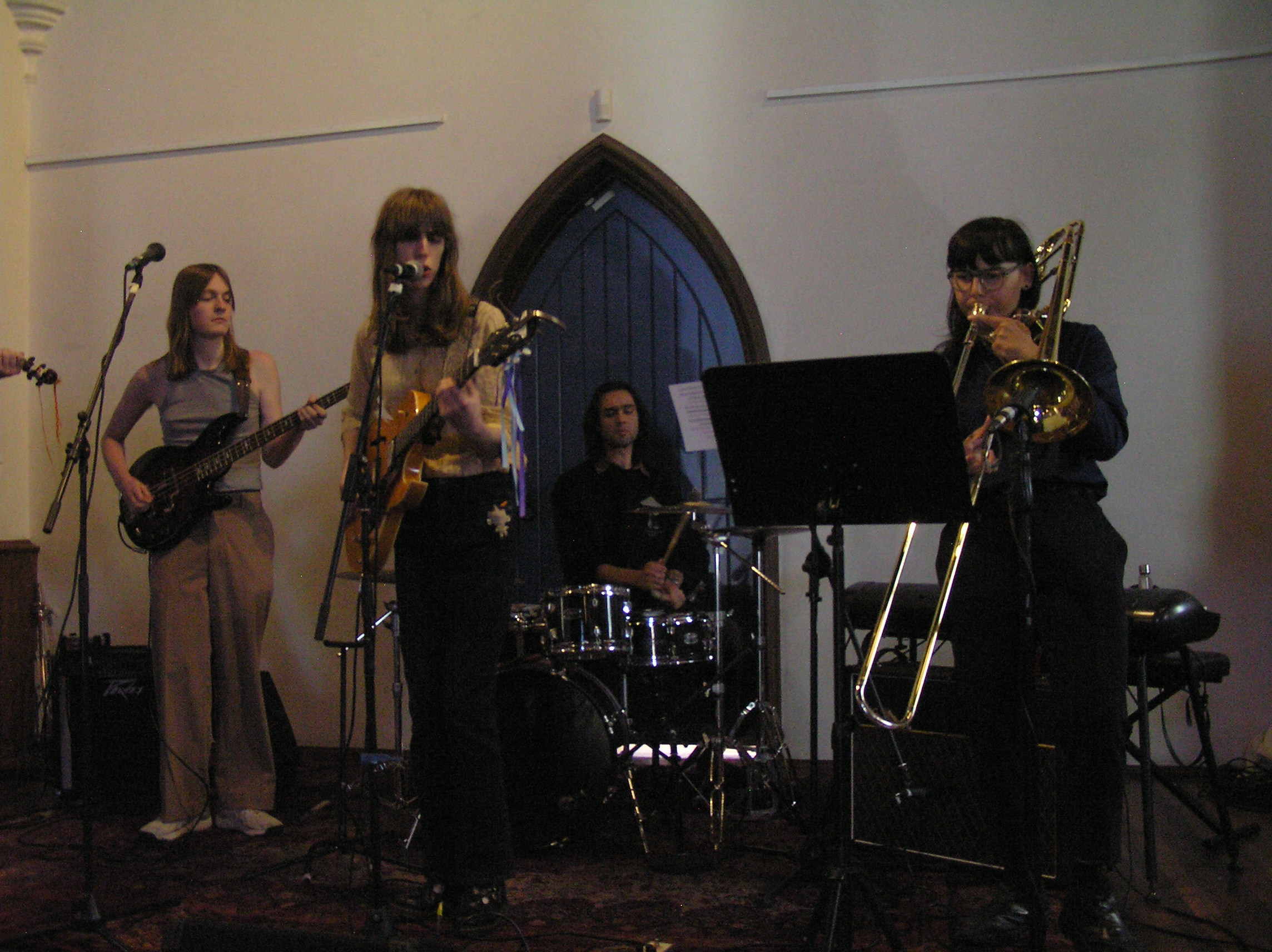
The Medicine Women are also a queer-led folk band in Melbourne’s music scene. As Darcy tells me, queer people thrive on self-expression, and the city fortunately nurtures spaces where such groups are dominant and don’t need to fight to be heard. For Darcy, she can experiment with her songwriting and identity in tandem. For instance, what she refuses to do is write songs about being transgender, but immediately contradicts herself by mentioning that the yet-to-be-released “Brighton Girls” is on that subject. “I get one song about how it feels for me to be transgender. No more,” she says with a laugh. “That’s my luxury. There’s no one way to live your life.”
As our conversation comes to a close, Darcy brings up another reference point that may better contextualise The Medicine Women’s sound: Prairie Princess’ sprawling alt-country debut album, Jewish American Prairie Princess. “Everything I wanted The Medicine Women to be, she went and did that already,” Darcy says. “But at the end of the day, I am a fan. Maybe I can be the one on stage, but I really just love listening to music. I love when people more talented than me are doing cool things.” Darcy might be modest, and could’ve chosen the path of no one hearing her songs, but the one she’s travelled on has given her fans like herself.
“Love Letter II & IV (the genre)” is out now on Bandcamp. Follow Clara Darcy and The Medicine Women on Instagram.